How to Generate High-Converting Organic Leads Without Spending a Dollar on Ads
Running paid LinkedIn ads can feel like lighting money on fire—especially when a single cost-per-click (CPC) routinely costs upwards of $10 to $15.
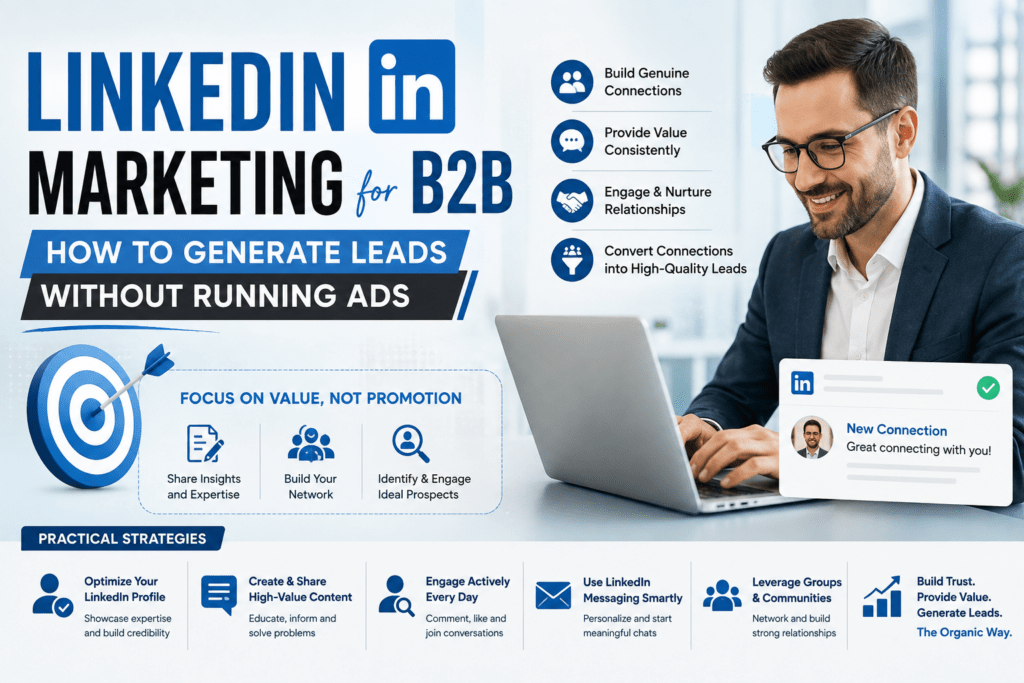
Generating organic B2B leads on LinkedIn without paid ads relies on treating personal profiles as high-converting landing pages rather than digital resumes. Personal brand profiles typically achieve 5x to 10x more reach than corporate company pages, making employee advocacy and founder-led content the primary organic growth engine. To capture high-intent leads, businesses must post value-driven content—such as PDF document carousels and industry insights—combined with low-friction “hand-raiser” posts that encourage decision-makers to comment in exchange for a template or guide. Rather than cold pitching, successful organic selling leverages strategic commenting on target prospect profiles and smoothly transitions public comment engagements into value-first Direct Message (DM) conversations. By consistently optimizing profiles, publishing trust-building content, and nurturing real relationships, B2B brands can build a predictable, cost-effective sales pipeline completely independent of ad spend.
The good news? You do not need a paid advertising budget to build a predictable, multi-million-dollar B2B sales pipeline on LinkedIn. In fact, organic lead generation on LinkedIn often results in higher deal win rates and shorter sales cycles. Why? Because B2B buyers don’t want to be pitched by a corporate ad banner; they want to buy from human experts they know, like, and trust.
Here is your end-to-end framework for turning your LinkedIn account into a zero-ad-spend lead generation machine.
1. Convert Your Personal Profile into a High-Converting Landing Page
Most B2B professionals treat their LinkedIn profile like a digital resume. They list job duties, education, and credentials.
If your goal is lead generation, your profile must act as a sales landing page. Personal profiles generate 5x to 7x more organic reach than corporate company pages, making them your primary conversion engine.
┌──────────────────────────────────────────────────────────┐
│ YOUR PROFILE BANNER │
│ Clear Value Proposition + Visual Social Proof │
└──────────────────────────────────────────────────────────┘
│
▼
┌──────────────────────────────────────────────────────────┐
│ HEADLINE FORMULA │
│ I help [ICP] achieve [Outcome] without [Pain Point] │
└──────────────────────────────────────────────────────────┘
│
▼
┌──────────────────────────────────────────────────────────┐
│ FEATURED SECTION │
│ Lead Magnet / Case Study / Direct Booking Link │
└──────────────────────────────────────────────────────────┘
Profile Optimization Essentials:
The Headline: Swap out “CEO at Acme Corp” for a benefit-driven pitch:
Formula:
I help [Ideal Customer Profile] achieve [Desired Result] without [Major Friction Point].Example: “I help SaaS Founders add $50k in ARR using organic outbound systems—without spending on paid ads.”
The Banner: Use clear visual branding showcasing your core promise, customer logos, or social proof (e.g., press features or speaking events).
The Featured Section: Treat this as your conversion hub. Include a direct link to book a discovery call, a downloadable PDF lead magnet (checklist/playbook), or a video case study.
The About Section: Write in the first person. Outline the specific problems your ideal clients face, how your framework solves them, and close with a clear Call to Action (CTA).
2. Execute the "95/5" Content Strategy
At any given time, only 5% of your market is actively buying, while 95% are not currently in-market. An organic LinkedIn strategy builds top-of-mind awareness with the 95% while harvesting demand from the 5%.
To attract decision-makers, publish a mix of three core content pillars:
2. Execute the "95/5" Content Strategy
| Content Pillar | Primary Objective | High-Performing Formats |
| 1. Educational / Value | Position yourself as a category authority. | PDF Document Carousels (step-by-step frameworks), detailed breakdown posts. |
| 2. Social Proof / Proof-of-Work | Build trust and lower perceived buying risk. | Client case studies, before/after metrics, visual teardowns. |
| 3. High-Intent Direct CTAs | Convert passive readers into active leads. | Hand-raiser posts (“Comment ‘SYSTEM’ to get my free 10-step SOP”). |
Pro-Tip on Formats: In current LinkedIn algorithm distribution, PDF Carousels and Native Video receive high reach and engagement rates. Keep text posts structured with short, punchy sentences and a compelling opening hook.
3. Leverage "Social Selling" & Inbound Hand-Raisers
Posting content without proactive outreach is simply waiting and hoping. To turn content engagement into actual sales conversations, employ a Hand-Raiser Engine:
Publish a Lead Magnet Post: Create a high-value resource (e.g., an audit checklist, template, or whitepaper).
Set up a Comment Gate: Tell readers: “Comment ‘PLAYBOOK’ below and I’ll DM you the raw template for free.”
Transition to the DMs (Direct Messages):
Step 1 (Fulfill Promise): DM the prospect the resource link without a heavy pitch.
Step 2 (Ask a Diagnostic Question): “Hey [Name], here is the link! Out of curiosity, are you currently trying to solve [X problem] at [Company Name] right now?”
Step 3 (Pivot to Call): If they acknowledge the pain point, offer a low-friction conversation: “We actually built a tailored workflow to fix that exact bottleneck. Open to a quick 15-min chat this week?”
4. Master Organic Outbound (Strategic Commenting)
You do not need to wait for leads to find you—you can go where they already hang out.
Build a “Top 50 Prospect” Bookmark List: Identify 50 dream accounts or industry influencers where your ideal buyers engage daily.
Provide Value in the Comments Section: Dedicate 20 minutes each day to writing high-value, insightful comments on your target audience’s posts.
Avoid Fluff: Never comment “Great post!” Write mini-insights that add extra perspective, data, or counter-intuitive tips. This sparks profile visits and inbound connection requests from decision-makers.
5. Activate Employee Advocacy as a Force Multiplier
If you have a team—even a small team of 3 to 10 people—empower them to post or engage with key content.
When employees share behind-the-scenes views, client wins, or engage with company updates within the first hour of posting, LinkedIn’s algorithm signals high content quality, expanding reach by 5x to 10x without additional spend
Summary Checklist for Organic B2B Success
[ ] Re-brand personal profile from a resume to a client-centric sales page.[ ] Publish 3 to 4 high-value posts per week (focusing on carousels and tactical insights). [ ] Run 1 “Hand-Raiser” post every two weeks to collect warm leads.[ ] Comment thoughtfully on 10–15 target prospect profiles every working day.[ ] Move comments into low-pressure, value-first Direct Messaging (DM) conversations.
By executing this flywheel consistently over 60 to 90 days, you will establish an organic B2B lead engine that yields qualified meetings—completely independent of ad spend.