In a digital marketplace flooded with endless notifications, banner ads, and product specs, consumers have developed a near-infallible defense mechanism: indifference. We skip ads within five seconds, install ad-blockers, and scroll past corporate self-promotion without a second glance. Yet, some brands command cult-like devotion. People wait in lines for hours for their products, proudly wear their logos, and defend them passionately online.
What separates the brands we ignore from the brands we love?
The answer is storytelling.
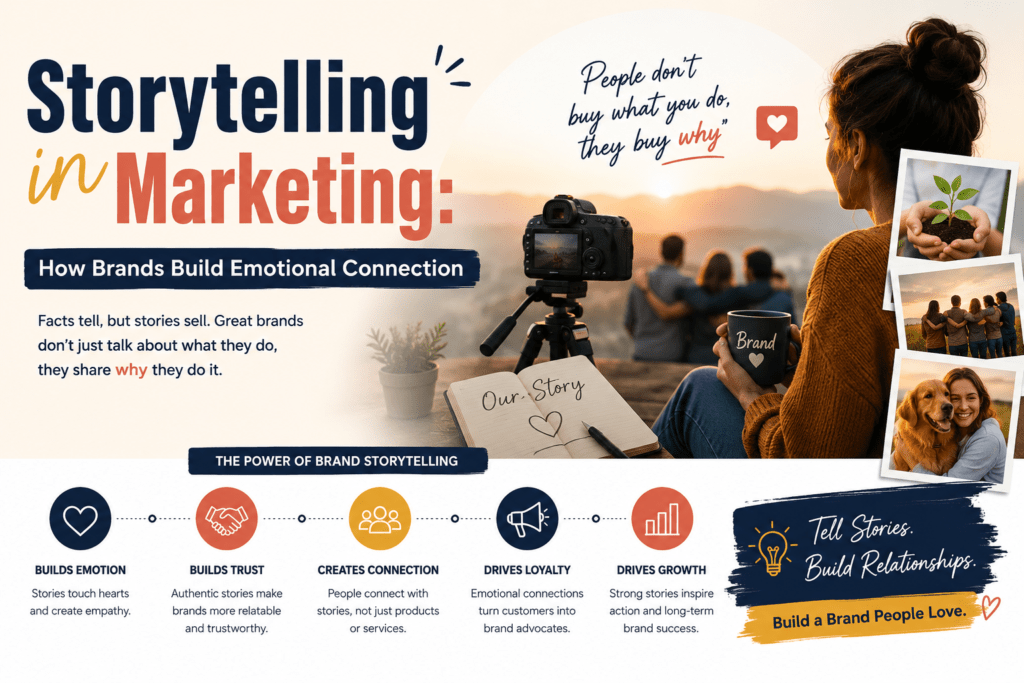
Human beings are hardwired for stories. Long before we invented writing, commerce, or the internet, we gathered around campfires and shared narratives to make sense of the world, establish trust, and pass down survival knowledge. Today, the campfire has shifted to screens of all sizes, but the underlying psychology remains identical. Brands that master the art of storytelling do not just sell products; they create emotional resonance, turning casual buyers into lifelong advocates.
1. The Neuroscience of Storytelling: Why Facts Tell, But Stories Sell
Traditional marketing relied heavily on the Rational Choice Theory—the assumption that human beings make purchasing decisions based on logic, feature comparisons, and price optimization. If a company built a better widget and listed its superior specifications, consumers would logically buy it.
Modern neuroscience has thoroughly debunked this model.
Neuroscientist Antonio Damasio studied individuals with damage to the part of the brain where emotions are processed. He discovered something profound: while these individuals retained their cognitive abilities and could logically list a product’s features, they were incapable of making decisions. Without emotion, choice is impossible.
When consumers encounter a brand story, something remarkable happens in the brain:
Neural Coupling: The listener’s brain activity mirrors that of the speaker or storyteller. When a brand tells a compelling story, the consumer does not just process information; they experience it.
Dopamine Release: The brain releases dopamine when it experiences an emotionally charged narrative, making the story more memorable and engaging.
Oxytocin Generation: Empathy-inducing stories trigger the release of oxytocin, the hormone responsible for trust, connection, and generosity. This is the biological engine driving brand loyalty.
Data informs the brain, but emotion drives the decision. Stories bridge the gap between what a product does and why a consumer should care.
2. The Core Anatomy of a Brand Story
A compelling brand narrative is not a fictional fairy tale or a recycled corporate mission statement. It is a strategic framework designed to position the customer as the hero and the brand as the guide.
A. The Hero (The Customer, Not the Brand)
The cardinal sin of brand storytelling is making the company the hero. Customers do not care about how great your company is; they care about how great they can become. In every effective marketing narrative, the customer is Luke Skywalker, and the brand is Yoda or Obi-Wan Kenobi. The brand provides the tools, wisdom, and support needed to help the hero conquer their challenges.
B. The Conflict (The Pain Point)
Every great story requires tension. In marketing, the conflict is the friction, frustration, or unfulfilled desire keeping your target audience awake at night. Whether it is administrative chaos for a B2B software buyer or the anxiety of finding sustainable fashion for a retail shopper, defining the enemy or the obstacle creates immediate relevance.
C. The Resolution (Transformation)
Products are not purchased for their physical attributes; they are purchased for the identity transformation they provide. A gym membership is not bought for the dumbbells; it is bought for the identity of being healthy and disciplined. A luxury watch is not bought to tell time; it is bought to signal status and achievement. Your story must clearly illustrate life after the transformation.
3. Pillars of Emotional Resonance
Building an emotional connection requires more than clever copywriting. It demands authenticity, consistency, and psychological alignment with your audience’s core values.
+-------------------------------------------------------------+
|               PILLARS OF EMOTIONAL RESONANCE                |
+---------------------+---------------------------------------+
| Pillar              | Strategic Focus                       |
+---------------------+---------------------------------------+
| 1. Authenticity     | Aligning messaging with core actions. |
| 2. Vulnerability    | Acknowledging flaws and real stakes.  |
| 3. Shared Values    | Taking a stand on cultural issues.    |
| 4. Sensory Design   | Utilizing visuals, audio, and tone.   |
+---------------------+---------------------------------------+
Authenticity Over Perfection
Consumers possess a finely tuned radar for corporate hypocrisy. Glossy, overly sanitized campaigns often fail because they feel manufactured. Brands that tell stories rooted in truth—acknowledging their journey, their missteps, and their real-world impact—build deeper trust.
Vulnerability and High Stakes
Stories that resonate deeply often involve a degree of vulnerability. When a brand shares why it was founded—perhaps born out of a personal tragedy, an industry-wide frustration, or a failed venture—it humanizes the corporate entity. People connect with people, not logos.
Shared Values and Purpose
Modern consumers, particularly Millennials and Gen Z, expect brands to stand for something beyond profit. Purpose-driven storytelling highlights a brand’s mission, environmental footprint, or social impact. When a consumer believes purchasing a product contributes to a greater good, the transaction transcends commerce and becomes an expression of personal identity.
4. Real-World Case Studies: Masters of the Craft
Examining how industry leaders operationalize storytelling reveals actionable blueprints for brands of any size.
Airbnb: Belonging Anywhere
When Airbnb entered a crowded travel market dominated by hotel chains offering standardized predictability, they didn’t market square footage or mattress firmness. They marketed belonging.
Through user-generated content and narrative-driven campaigns like “Live There,” Airbnb shifted the conversation from lodging to human connection. Their stories highlighted local hosts, cultural immersion, and intimate community moments. They positioned themselves not as a booking engine, but as an enabler of global empathy and authentic human experience.
Nike: Selling the Identity, Not the Sneaker
Nike rarely talks about the thread count, rubber compound, or air-pocket technology of its footwear in its marquee campaigns. Instead, Nike sells inspiration and human potential.
Campaigns like “Just Do It” or tributes to athletic perseverance do not focus on the product; they focus on the psychological battle every athlete faces against self-doubt. When you buy Nike shoes, you are purchasing a piece of that narrative—an endorsement of your own inner drive and resilience.
Patagonia: Radical Activism as Brand Story
Patagonia takes purpose-driven storytelling to an extreme. Their famous “Don’t Buy This Jacket” campaign during Black Friday urged consumers to reduce consumption and think about environmental impact.
By taking a stance that actively discouraged immediate sales, Patagonia built unprecedented long-term brand equity. Their audience knows that buying Patagonia means aligning with environmental stewardship. The story is not just about outdoor gear; it is about saving the planet.
5. Crafting Your Brand Narrative: A Step-by-Step Framework
Translating these principles into your marketing strategy requires a methodical approach. Follow this framework to build your brand’s emotional narrative from the ground up:
Step 1: Deep Audience Empathy Mapping
You cannot tell a story that resonates if you do not intimately understand your audience. Go beyond demographics (age, location, income) to explore psychographics:
What keeps them up at night?
What are their secret aspirations?
What frustrates them about current market solutions?
What language do they use when talking about their problems?
Step 2: Define Your Brand Archetype
Rooted in Carl Jung’s psychological archetypes, aligning your brand with a specific persona helps maintain narrative consistency. Are you The Explorer (adventurous, pioneering like Jeep), The Sage (wise, educational like Google), or The Caregiver (nurturing, supportive like Johnson & Johnson)? Your archetype dictates your tone of voice and the types of stories you tell.
Step 3: Map the Narrative Arc Across the Customer Journey
Storytelling is not confined to a single “About Us” page. It must permeate every touchpoint of the customer journey:
Awareness: Top-of-funnel content that highlights the universal conflict and grabs attention.
Consideration: Middle-of-funnel case studies and customer spotlight stories that demonstrate the guide’s methodology.
Decision/Retention: Post-purchase onboarding stories that celebrate the hero’s transformation and foster community.
6. Measuring the Impact of Emotional Marketing
Because emotional connection is qualitative, marketers often struggle to measure its ROI. However, brand storytelling directly influences critical business metrics:
Customer Lifetime Value (LTV): Emotionally connected customers have a significantly higher LTV because they are less price-sensitive and more prone to repeat purchases.
Net Promoter Score (NPS): When people feel an emotional bond with a brand, they are far more likely to recommend it to friends and colleagues, driving organic word-of-mouth growth.
Lower Customer Acquisition Cost (CAC): Brands with strong, resonant stories build organic communities and viral loops, reducing reliance on paid ad spend.
Conclusion: The Future of Connection
As artificial intelligence and automated marketing tools make content creation faster and more abundant, sameness is becoming the greatest threat to modern brands. When everyone can generate average copy with a few keystrokes, technical features and generic content lose their differentiating power.
The ultimate competitive advantage is human emotion.
Stories cannot be commoditized. Your unique history, your perspective on your industry, and the authentic transformations you create for your customers are entirely yours. By abandoning sterile corporate speak and embracing the timeless art of narrative, you can build a brand that does not merely transact—it resonates, inspires, and endures.
Suggested Imagery for This Article
If you are publishing or designing layout assets for this post, here are the recommended image specifications:
Image Name:
hero-campfire-marketing-storytelling.jpgAlt Text: Diverse group of professionals gathered around a glowing digital screen discussing brand strategy.
Meta Description: Explore how storytelling in marketing builds deep emotional connections, drives brand loyalty, and transforms customers into lifelong brand advocates.
Description: A conceptual hero image illustrating modern digital storytelling, bridging human psychology with cutting-edge brand strategy.