Introduction
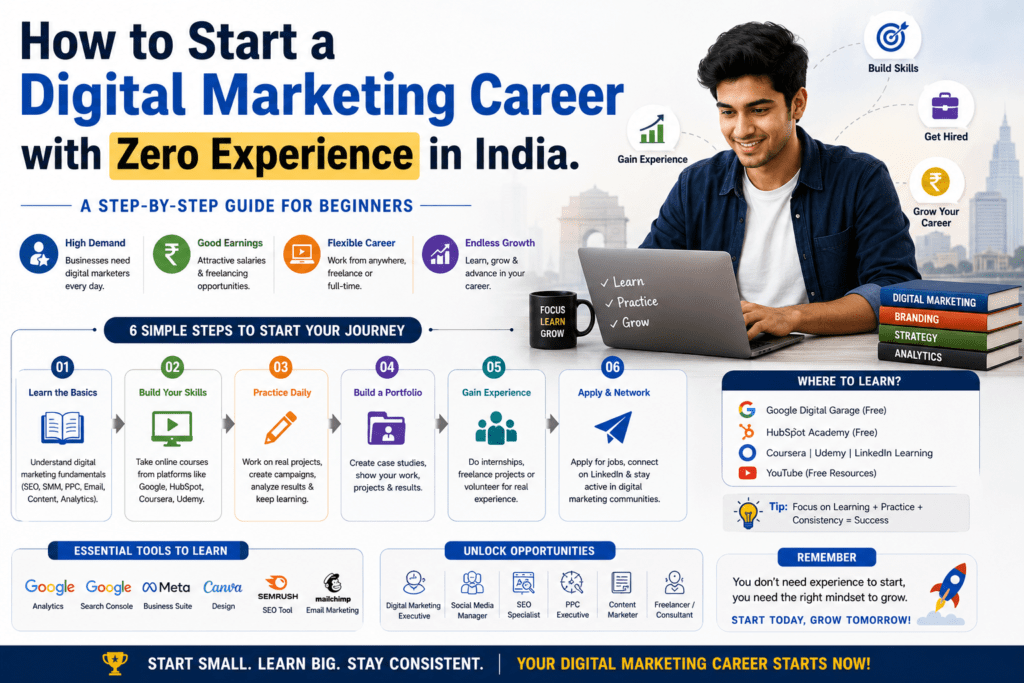
Digital marketing is one of the fastest-growing career fields in India. As businesses continue to move online, the demand for skilled digital marketers is increasing across industries. The best part? You don’t need a marketing degree or years of experience to get started.
Whether you’re a student, a recent graduate, a working professional looking for a career change, or someone returning to work, digital marketing offers multiple opportunities to build a successful career.
In this guide, you’ll learn exactly how to start your digital marketing journey from scratch.
Digital marketing is the practice of promoting products or services through online channels such as:
- Search engines (Google)
- Social media platforms
- Email marketing
- Websites and blogs
- Online advertising
- Content marketing
- Video marketing
- The goal is to reach the right audience, generate leads, and increase sales using digital platforms.
Why Choose Digital Marketing as a Career?
Digital marketing has become one of India’s most in-demand skills because:
- High demand across industries
- No specific degree required
- Multiple career paths
- Good salary growth
- Freelancing opportunities
- Work-from-home and remote jobs
- Opportunity to start your own agency or business
Step 1: Learn the Basics
Before applying for jobs, understand the fundamentals of digital marketing.
Focus on learning:
- Search Engine Optimization (SEO)
- Search Engine Marketing (SEM)
- Social Media Marketing (SMM)
- Content Marketing
- Email Marketing
- Google Ads
- Facebook & Instagram Ads
- Analytics
- Marketing Funnels
- Lead Generation
Start with free online resources, YouTube tutorials, blogs, and beginner-friendly courses.
Step 2: Choose One Skill to Master First
Instead of learning everything at once, specialize in one area.
Popular options include:
- SEO
- Social Media Marketing
- Content Writing
- Google Ads
- Performance Marketing
- Email Marketing
- Graphic Design for Marketing
- Video Marketing
Once you’re confident in one skill, expand into others.
Step 3: Get Free Certifications
Certifications help demonstrate your knowledge to employers.
Useful certifications include:
- Google Analytics
- Google Ads
- HubSpot Content Marketing
- HubSpot Email Marketing
- Meta Digital Marketing
- LinkedIn Learning Certificates
While certificates alone won’t guarantee a job, they strengthen your resume.
Step 4: Build Your Own Practice Projects
Experience doesn’t always come from a company.
Create your own projects such as:
- Start a blog
- Create an Instagram page
- Build a LinkedIn presence
- Launch a YouTube channel
- Create a simple website
- Run small advertising campaigns
- Practice keyword research
- Optimize your own website for SEO
These projects become your portfolio.
Step 5: Learn Essential Marketing Tools
Most employers expect candidates to know common tools.
Examples include:
- Google Analytics
- Google Search Console
- Canva
- WordPress
- ChatGPT
- Meta Business Suite
- Google Keyword Planner
- SEMrush
- Mailchimp
You don’t need to master every tool immediately—start with the basics.
Step 6: Build a Strong Portfolio
A portfolio proves your practical skills.
Include:
- Personal projects
- Blog articles
- SEO reports
- Social media posts
- Website screenshots
- Campaign results
- Certificates
- Case studies
A simple portfolio website can help you stand out from other beginners.
Step 7: Start Freelancing
Freelancing helps you gain real-world experience.
You can offer services like:
- Social media management
- SEO
- Content writing
- Website optimization
- Graphic design
- Email marketing
Even small projects build confidence and improve your resume.
Step 8: Apply for Internships
Many companies hire interns with little or no experience.
Look for roles such as:
- Digital Marketing Intern
- SEO Intern
- Social Media Intern
- Content Marketing Intern
- Performance Marketing Intern
Internships provide practical learning and often lead to full-time jobs.
Step 9: Build Your Personal Brand
Employers often search for candidates online.
Strengthen your online presence by:
- Posting regularly on LinkedIn
- Sharing marketing insights
- Writing blogs
- Creating educational content
- Showcasing your projects
- Networking with professionals
Your personal brand can open doors to new opportunities.
Step 10: Prepare for Interviews
Freshers should be ready to answer questions about:
- SEO basics
- Social media strategies
- Google Ads
- Marketing terminology
- Campaign planning
- Analytics
- Personal projects
- Tools you’ve used
Employers value practical understanding more than memorized definitions.
Expected Salary in India
Typical salary ranges are:
- Digital Marketing Intern: ₹8,000–₹20,000 per month
- Digital Marketing Executive: ₹2.5–₹5 LPA
- SEO Executive: ₹2–₹4.5 LPA
- Social Media Executive: ₹2.5–₹5 LPA
- Performance Marketer: ₹4–₹8 LPA
With experience, salaries can grow significantly.
Common Mistakes Beginners Make
Avoid these mistakes:
- Trying to learn everything at once
- Ignoring practical projects
- Depending only on certificates
- Not building a portfolio
- Giving up too early
- Avoiding networking
- Not staying updated with industry trends
Career Growth Opportunities
As your skills improve, you can progress to roles such as:
- SEO Specialist
- Performance Marketing Manager
- PPC Specialist
- Content Marketing Manager
- Social Media Manager
- Marketing Automation Specialist
- Digital Marketing Manager
- Growth Marketer
- Freelance Consultant
- Agency Owner
Final Thoughts
Starting a digital marketing career with zero experience in India is completely achievable if you’re willing to learn consistently and practice regularly. Focus on building real skills, creating a portfolio, earning relevant certifications, and gaining hands-on experience through personal projects, internships, or freelancing.
Remember, employers value what you can do more than the number of certificates you hold. Stay curious, keep experimenting, and continue learning as the digital landscape evolves. With dedication and persistence, you can build a rewarding career in digital marketing—even if you’re starting from scratch.